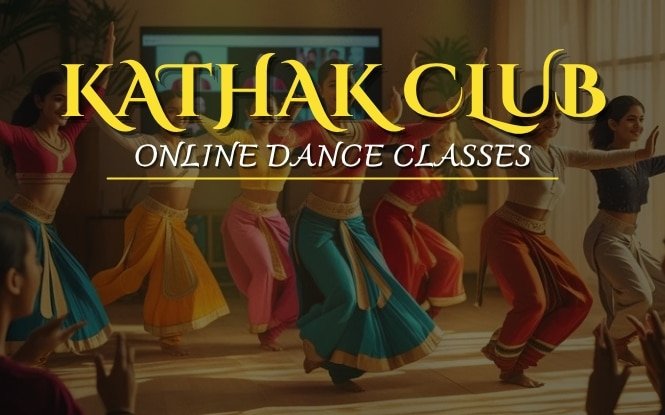
Have you ever dreamt of learning a classical dance form that tells stories through rhythm, movement, and expression? Whether you are a complete beginner or a trained dancer aiming to refine your skills, Kathak Club offers a welcoming space to explore and master the mesmerizing world of Kathak dance all from the comfort of your home.
Kathak Club is an online platform committed to spreading the timeless elegance of Kathak dance worldwide. Our mission is to make this classical art form accessible, flexible, and joyful for all regardless of age, background, or location. With 5+ years of expertise, we have empowered over 5,000+ students to learn and grow through our online Kathak classes, guided by experienced artists and personalized teaching.
Online platforms like Kathak Club are further revolutionizing access to classical dance, connecting students with experienced teachers from across India. The fee structure is as follows:
•Rs. 1000 per class for individual sessions
•Rs. 2000 per month for group sessions (limited to 10 students per batch).
This ensures personal attention and high-quality learning for every student.
•Individual & group Kathak classes
•Flexible class timings based on your schedule
•Live & interactive sessions with expert instructors
•Personal attention to every learner
•Immediate doubt resolution and feedback
•No age barrier — anyone can start at any stage
•Customized learning plans for all levels
Kathak is one of the eight major classical dance forms of India, known for its grace, intricate footwork, swift spins, and expressive storytelling. The word 'Kathak' originates from Katha, meaning ‘story’. Its performers, called Kathakars, narrate stories through dance and expressions.
Historically rooted in temple traditions and later refined in royal courts, Kathak today represents a perfect blend of devotion, art, and performance.
•Mythological Beginnings: The tradition of storytelling through dance can be traced back to Kushilavas, performers like Luv and Kush who recited Ramayana in King Ram's court.
•Temple to Court: With the arrival of Islamic rule in the 13th century, Kathak transitioned from temples to royal courts. Dancers adapted their styles based on the patronage of kings and nawabs.
•Rise of Gharanas: Influenced by different cultural contexts, prominent Kathak styles like the Jaipur Gharana (focused on footwork) and Lucknow Gharana (known for expressiveness) were born.
•Post-Independence Recognition: With the establishment of Sangeet Natak Akademi and inclusion in academic curricula, Kathak became a celebrated part of Indian heritage.
Today, Kathak continues to thrive on global platforms with modern choreography and traditional roots.
There are 3 main aspects of Kathak dance that are known as Natan bhed These aspects comprise the following - Nritta, Natya, and Nritya.
1.Nritta (Technical Aspect):
•Pure dance without expressions
•Includes: Tatkaar (footwork), Aamad, Thaat, Tode-Tukde, Paran, Tihai
2.Natya (Dramatic Aspect):
•Portraying characters using expressions, costume, and body language
•Not mimicry, but stylized representation
3.Nritya (Combined Art):
•Blend of Nritta and Natya
•Includes expressive dance set to music like Thumri, Bhajan, and Gat Bhav
These aspects together make Kathak a rich and complete classical art form.
In Kathak, rhythm is everything. The dancer becomes the instrument. Common musical accompaniments include:
•Tabla
•Pakhawaj
•Harmonium
•Sarangi
The ghungroo
(ankle bells) are the dancer's own instrument, used to recreate the rhythm of these instruments through footwork.
Kathak costumes are elegant and royal:
•For Women: Lehenga-choli with dupatta or Angrakha style Anarkali with churidar
•For Men: Kurta or bagalbandi with pajama and dupatta at the waist
Costumes not only enhance the visual appeal but also help portray the characters more authentically.
Today, Kathak is embraced by learners of all backgrounds and cultures:
•Included in university and school curriculums
•Supported by government scholarships, fellowships, and awards
•Performed globally in festivals, cultural exchange programs, and digital concerts
•School and college students
•Working professionals
•Homemakers
•NRIs staying connected to roots
•Retired individuals
•Aspiring performers and dance teachers
No matter where you are in life, Kathak Club welcomes you to begin or continue your dance journey.